
Taking a festival with a baby can feel like a much bigger operation than going with a backpack and a vague plan, but it is possible to have a lovely time. The trick is to choose the right event, lower your expectations and organise the basics before you arrive. I have been to festivals with my son and to plenty without children, and the experience is very different, but good planning helps both versions. If you are deciding where to go, start with my guide to family-friendly festivals in the Midlands, then use this checklist to work out what will suit your family.
A baby or toddler does not need a packed entertainment schedule. They need shade, food, sleep, clean nappies and a calm adult nearby. You will probably miss some late-night sets, and that is fine. A successful family festival might mean seeing one band, enjoying a meal, having a dance, then getting back to your tent before everyone is overtired.
My first festival with a four-week-old
Arlo was four weeks old when I took him to his first festival. We’d only gone out for a walk. I was on maternity leave in Kent and just getting to the point where I could tell his hungry sounds from his nappy-change sounds. It was a lovely sunny day and there happened to be live music in the park.
I knew where to park, where the proper toilets and changing facilities were, and that home was only 15 minutes away. I already had the pram, changing bag, spare bottle and about three changes of clothes, because that was what it took to leave the house anyway. I found a spot on the grass, got a soft drink and an ice cream, and listened to music I knew while Arlo slept beside me. After a couple of hours I thought, ‘I’ve had a lovely time,’ and went home.
A few weeks later we went to a festival in Birmingham with my parents and stayed the whole day. Being able to go to the loo while they watched Arlo made such a difference. If I’m going solo, I want to know which toilets have room for the pushchair before I need to use them.
What changed when Arlo became a toddler
Once Arlo was on the move, I had to think about where he could get out and have a little dance without disappearing into the crowd. He liked watching from the pushchair, getting out to join in, then climbing back in when he’d had enough. At bigger festivals we made time for baby raves, bubbles and circus acts. I enjoy those bits too.
Arlo still asks if we can take the trolley. It became his little corner of the festival, with pockets for snacks, Lego and Uno, a blanket and some fairy lights. Half the fun was getting to pull it himself. When Mum came with us, we could take turns staying with Arlo and going closer to watch a band. On my own, if he was overtired, I’d head back to the tent and be glad we’d had a good day.
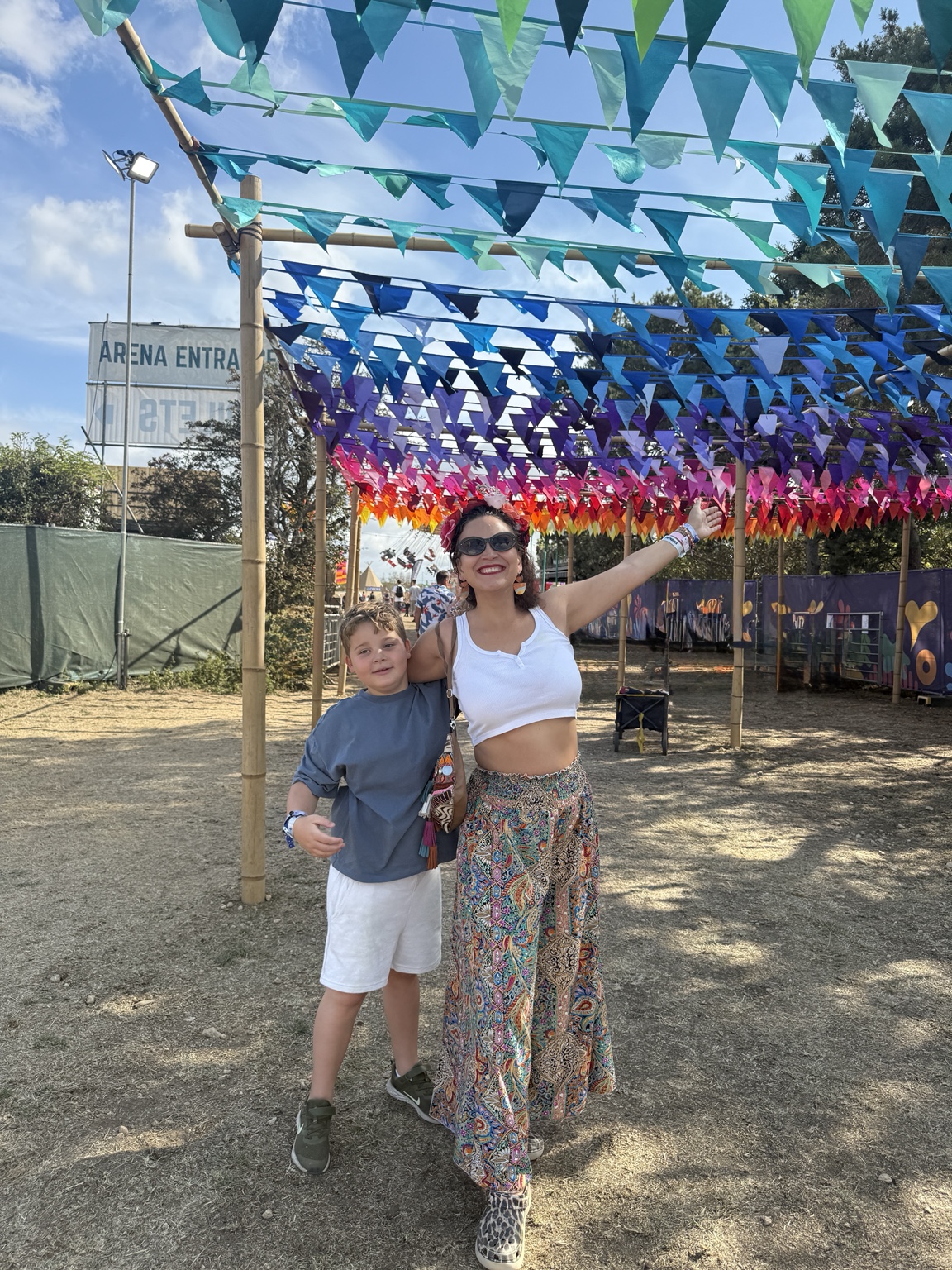
Give yourself an easy way out
I’ve gone home when the rain stopped being fun. Other times we’ve taken a break together in the parked car. I keep a few snacks there, and sometimes Arlo’s tablet is still there from the journey. After a bit of breathing space we can decide whether to call it a day or go back and jump in the mud. A couple of good hours can be the whole outing.
At a glance
- Choose a festival with family facilities, manageable walking distances and clear information for parents.
- Take both a carrier and a suitable buggy if you have space, but check the festival’s rules first.
- Plan simple feeding, nap and nappy routines, while accepting that they may happen somewhere different.
- Prioritise shade, sun protection, layers and proper ear protection around loud music.
- If you are going alone, share your plan with someone at home and make safety arrangements before you leave.
- Pack deliberately, buy less on site and leave room for the fact that plans change.
Choose the right festival for your family
Not every festival is designed with babies and toddlers in mind. Look for clear family camping information, toilets and washing facilities, changing areas, a family welfare point, quiet spaces and practical details about access. The most important question is not whether the festival advertises children’s activities. It is whether the whole layout feels manageable with a tired child and a lot of kit.
Family-focused events such as the Big Feastival, Lakefest, CoCoMAD and Nozstock can offer a gentler introduction, but always check the current arrangements before booking. Even at a family-friendly festival, facilities and rules can change from one event to another. Reading and Leeds are very different experiences from a toddler-friendly camping weekend, so consider the crowd, music levels, camping set-up and how much late-night activity you genuinely want.
Questions to check before booking
- Is family camping available, and is it separate from the busiest camping area?
- Can you take a buggy, wagon or trolley into the arena?
- Are there baby-changing, feeding and quiet areas?
- How far is the car park from camping, and is there assistance for heavy equipment?
- What happens if the weather is very hot or wet?
- Are there restrictions on cooking equipment, food, glass, liquids or camping furniture?
Buggy, carrier or wagon?
There is no single perfect way to transport a small child at a festival. A carrier is useful for uneven ground, busy areas and short trips when a buggy would be awkward. Choose one that fits you properly, supports your child’s position and does not leave either of you too hot. Practise using it before the festival, especially if you will be putting it on and taking it off while carrying bags.
A buggy provides somewhere for a child to rest and can carry useful equipment, but festival ground may be muddy, rutted or crowded. Large wheels and a good sun canopy are more useful than a small, lightweight design. Do not assume that a wagon is allowed. Some festivals restrict them because of access and safety, so check the event’s own guidance rather than relying on what was accepted elsewhere.
Whichever option you use, keep essentials in a small accessible bag rather than burying them underneath everything else. I want nappies, wipes, water, snacks, sun protection and a spare layer within reach without unpacking the whole buggy.
Feeding and food at a festival
Feeding a baby at a festival is usually easier when you keep the routine familiar and the equipment simple. If you are breastfeeding, identify quieter places where you feel comfortable, and take a muslin or cover only if you find one helpful. If your child has formula, follow the manufacturer’s instructions and the festival’s guidance about preparing feeds. Take enough of the supplies you rely on, because the exact products or clean water you need may not be available on site.
For toddlers, familiar food can prevent a lot of stress. I pack options that travel well, are easy to hold and do not need refrigeration, such as breadsticks, oat bars, fruit that will not bruise easily, crackers or pouches that my child already knows. Avoid introducing several new foods at the same time as a festival. If your child has allergies, take safe food with you, keep it clearly identified and speak to food vendors before ordering.
Food safety without a fridge
As a food teacher, I am careful about chilled food at festivals. A cool bag slows warming but does not make food safe indefinitely, so use ice packs, keep it out of the sun and follow the storage instructions on the packaging. Do not keep dairy, meat, cooked rice or other perishable food warm in a tent or car and hope it will be fine later. Pack small portions, use shelf-stable foods where possible and throw away anything that has been left at an unsafe temperature.
For simple camp cooking, choose foods that need one pan, little preparation and no complicated washing up. Follow the festival’s rules for stoves, keep cooking equipment away from the tent entrance and never use a stove inside the tent. Hot drinks, pans and a crawling or toddling child are a difficult combination, so create a clear cooking area and keep handles turned away from the edge.
Naps and sleeping in a tent
Do not build the whole day around achieving a perfect nap. Keep the usual sleep cues where you can, such as a familiar sleeping bag, comforter, white noise or a short routine. A carrier nap, buggy nap or quiet feed may be what works on the day, even if it is not your normal arrangement at home.
A tent can become extremely hot, even when the morning feels mild. Put it in the shadiest sensible place, ventilate it safely and never cover the entrance with blankets to block the sun. Check your child regularly, feel their back or chest rather than relying only on hands and use light, breathable layers. If the tent becomes too hot, leave it and find a cooler place. Babies and toddlers can become unwell quickly in heat.
Think about your own sleep too. If you are camping alone with my son, I keep the bedtime plan realistic and avoid committing to late activities. If another trusted adult is with you, agree who is responsible for bedtime and night waking before tiredness turns a small decision into an argument.
Nappies, washing and everyday kit
Take more nappies than you think you will need, plus wipes, nappy sacks, barrier cream and a portable changing mat. Add spare clothes for your child and at least one spare top for you. Food, mud, leaks and enthusiastic water play can all create a need for a change of clothes.
Find out where the changing and washing facilities are when you arrive. A small wash kit can include flannels, hand sanitiser, tissues and a towel. Use the proper toilets and changing areas rather than changing a nappy beside food or in a crowded walkway. Keep used nappies contained and follow the festival’s waste instructions.
Pack a familiar cup or bottle, but do not assume every water point is suitable for filling it. Check the event’s drinking-water arrangements and bring a labelled bottle that is easy to clean. If your child is still in nappies at night, plan for that rather than relying on a late-night toilet trip.
Sun, sound and clothing
Sun protection needs more thought than just packing sun cream. A wide-brimmed hat, lightweight covering layers and a buggy canopy or shade attachment can help, but do not drape fabric over a buggy in a way that traps heat. Reapply sun protection as directed, particularly after water play, sweating or wiping hands and faces.
Music can be much louder than it sounds from the edge of a field. Use properly fitting, child-sized ear defenders, introduce them before the festival and take them off regularly in quieter areas. Ear defenders reduce sound, but they do not make standing beside speakers safe, so keep a sensible distance from stages and sound systems.
Weather can change quickly. Pack warm layers, waterproofs and footwear that can cope with wet grass, as well as lighter clothes for hot weather. A baby cannot tell you they are too cold, too hot or uncomfortable, so keep checking rather than assuming the outfit is working.
Going as a single parent
Going alone with a baby or toddler requires more planning, but it can still be enjoyable. Before you leave, tell someone at home where you are staying, share the festival’s contact details and agree when you will check in. Keep your phone charged, take a portable power bank if permitted and save important information offline in case reception is poor.
Use a simple meeting point in case you become separated from anyone you are travelling with. Put your phone number inside a pocket or bag, and teach an older toddler, in an age-appropriate way, to look for a steward or family welfare worker if they cannot see you. Keep your child close in crowds and avoid relying on a buggy as a place of safety when people are moving around quickly.
My biggest sanity-saving tip is to make the day smaller. Choose one or two things you would really like to do, then treat anything else as a bonus. Eat before you are desperate, sit down when you find a comfortable place and leave an activity while it is still going well. A festival with a baby is not a test of endurance.
Save money without overpacking
Festival food and drinks can quickly become expensive, especially when a toddler wants a snack every few minutes. Take permitted food from home, use refill points where available and pack snacks in portions rather than buying several emergency items on site. A simple meal plan helps you avoid purchasing food because you are too tired to think.
Borrow camping equipment from family or friends if you can, and check what you already own before buying specialist kit. A familiar sleeping arrangement is often more useful than a collection of festival gadgets. Use reusable containers, but only bring items you will genuinely use. Every extra bag has to be carried, stored and cleaned.
I also budget for one convenient meal or treat rather than trying to do everything as cheaply as possible. When I have attended festivals without children, I could be spontaneous about food and timings. With my son, spending a little on the option that protects everyone’s energy can be worthwhile, as long as it is planned rather than accidental.
FAQ
Is it a good idea to take a baby to a festival?
It can be, if the event has suitable family facilities, you are comfortable with the camping and travel arrangements, and you are prepared to follow your child’s needs rather than a full entertainment schedule. Check the festival’s current rules and facilities before booking.
Should I take a buggy or a baby carrier?
It depends on the ground, your child’s routine and how much equipment you need to carry. A carrier is useful in crowds and on uneven ground, while a buggy offers somewhere to rest. If possible, take the option that suits the festival layout, but check whether both are permitted.
How do I keep a baby cool and protected at a festival?
Use light layers, a suitable hat, regular drinks or feeds, shade and frequent checks. Never cover a buggy or tent entrance in a way that traps heat, and move to a cooler place if your child seems flushed, unusually sleepy or uncomfortable.
What food can I take for a toddler?
Choose familiar, easy-to-eat foods that do not need refrigeration, and pack safe options for allergies or dietary needs. Keep chilled food properly cold, follow the festival’s rules and discard perishable food that has been warm for too long.
Festivals with little ones may look different from the child-free weekends I enjoyed at Reading and Leeds or other grown-up events, but they can still be full of music, food and good memories. Start small, plan the essentials and leave space for ordinary family moments. For more ideas on choosing your next event, visit my guide to family-friendly festivals in the Midlands.
Last Updated on Thursday, November 26, 2026 by Lavania Oluban