
Finding festival food ideas no fridge can feel like one more thing to organise when you are packing tents, clothes and everything your family might need. The good news is that feeding everyone at a festival does not need a full camp kitchen. With a little planning, you can take safe, filling food that needs no chilling, cook simple meals on one stove and avoid spending your whole budget at food stalls. As a food teacher, I think about food safety first, then practicality. These are the approaches that work for us, whether I am camping with my son or enjoying a grown-up festival without children.
If you are still choosing where to go, my guide to family-friendly festivals in the Midlands is a useful place to start. Check each event’s current information before you travel, because facilities, food rules and camping arrangements can vary.
At a glance
- Pack mostly sealed, shelf-stable food and take only what you can store safely.
- Use a cool bag with plenty of frozen blocks for anything that genuinely needs chilling.
- Plan food that can be eaten cold, assembled quickly or cooked in one pan.
- Bring familiar snacks, water and a few filling options for unpredictable queues.
- Keep handwashing, clean utensils and waste storage part of your food plan.
- Save money by taking breakfast, snacks and emergency meals from home.
Start with a realistic festival food plan
I’m a food teacher, but when I’m at a festival I want a break from cooking too. I’ve seen people do a whole weekend’s meal prep and pack it into a cool box with frozen blocks. I’d rather keep breakfast and snacks simple and spend some of my budget on food I’m excited to try. I’ll happily buy a cold wedge of watermelon on a hot afternoon. For more on where I spend and where I save, see my festival budget guide.
Before shopping, think through the whole day rather than planning elaborate camping recipes. Most families need breakfast, a packed lunch or substantial snack, dinner and a few small snacks between activities. You might buy one meal on site, so there is no need to carry food for every possible appetite. I usually plan one dependable option for each meal, plus a couple of foods that my son can eat while we are walking or waiting.
Write down what can be eaten straight from the packet, what needs assembling and what needs cooking. This quickly shows whether you need a stove at all. It also stops you buying ingredients that require several pans, refrigeration or a level of energy you simply will not have after a long day.
Pack food in meal groups
I let Arlo choose his porridge flavours at the supermarket. We get pots that only need hot water, or sachets he can empty into his camping mug. His mug has a carabiner and a spork attached, which means I can actually find the spork when I need it. On a tight budget I’ve portioned plain oats at home and packed them individually. For a second breakfast or a snack, I bring individually wrapped brioche or croissants. I can open one and leave the rest sealed.
Put breakfast items together, then lunch, dinner and snacks. Reusable bags or clearly labelled containers make it easier to find things in a tent, particularly when you are managing everything on your own. Keep one small day bag ready with water, snacks, wipes and a lightweight rubbish bag. I always pack a little more than the exact number of meals, but I avoid taking lots of fresh food that may spoil or come home unused.
What we actually eat on a festival Saturday
Breakfast at the tent. We start with porridge and usually an apple. The porridge keeps Arlo going, and I put a few things in my bag before we head out. A couple of apples, trail mix, crisps, cereal bars and a handful of sweets give us options if lunch takes longer than planned.
Lunch before the queues build. I keep an eye out for a food truck we like and try to go a little early. Some festivals do kids’ meals, but we often go for something we can eat while walking, like a chicken wrap. A noodle or rice bowl is another favourite, or we’ll share chips with ketchup if we just want a bite. If the queue’s huge, we have a snack and come back, or try another stall. One of my favourites is buttery corn on the cob, and I’ve often found a shorter queue for it.
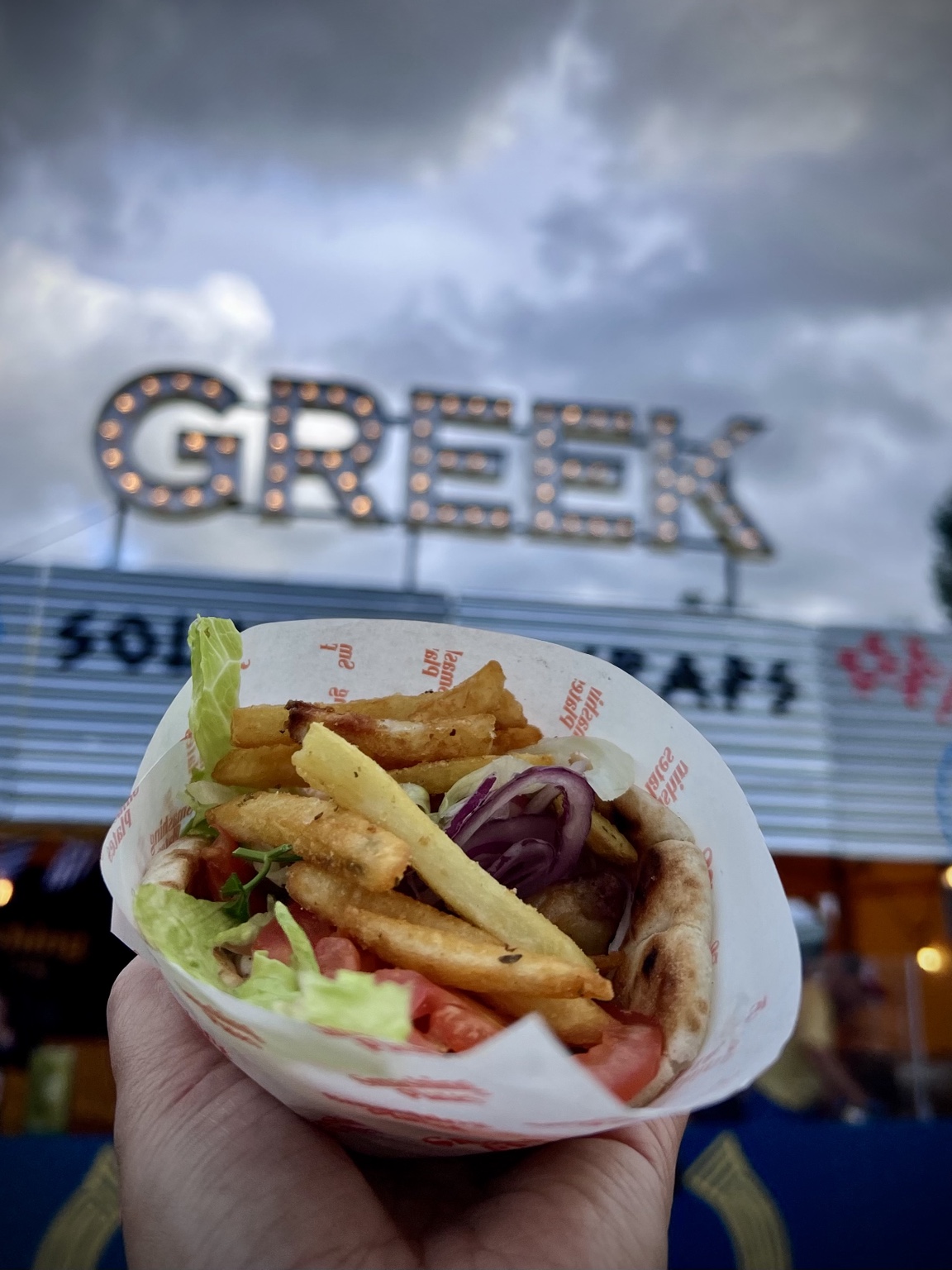
Back to the tent around four or five. We change our shoes, get the glitter and sequins out and sometimes have a little nap. If we’re hungry, I boil the kettle for a noodle pot while we’re there. It gives us a bit of breathing space before a late night at the main stage.
Pizza before the headliner, churros after dark. I look at the stage times and sometimes get food while the act before the headliner is still on, when there’s less of a rush. A pizza balanced on our knees in the camp chairs is lovely to share while we wait. Then it’s dark, there are twinkly lights everywhere and someone’s asking, “Can we have the churros now, Mum?”
What I buy for two nights
I buy a multipack of breakfast pots or sachets, some cereal bars, a multipack of crisps, a few apples and some trail mix. I put a few in the day bag each morning and keep some snacks and water back for the journey home. Sometimes we still end up at the McDonald’s drive-through on the way home, and that’s fine too.
No-fridge foods that do the hard work
The safest no-fridge choices are sealed, shelf-stable foods that can stay at room temperature until they are opened. Think oat bars, cereal, crackers, bread or wraps, dried fruit, nuts where suitable, popcorn, pretzels, rice cakes and individual portions of UHT milk. Tinned fish, beans, lentils, soup and fruit can be useful too, provided you have a can opener where needed and a plan for leftovers.
Single portions are particularly helpful at a festival because you do not need to keep returning to a large opened packet. Small cartons or sachets also reduce waste. Check packaging for storage instructions, especially if the product contains dairy, meat or egg. A food being sold as a camping item does not automatically mean it can be stored in any condition once opened.
Fresh food needs a bit more thought
Whole apples and satsumas go in my bag. A banana that’s spent half a day squashed at the bottom of a rucksack can stay at home next time. I might bring berries to eat early, but I’d buy fresh fruit like watermelon on site if that’s what I fancy later. For snacks that can stay in the bag, I like cereal bars, little packets of crisps or trail mix with nuts and raisins where the event allows nuts.
Whole fruit such as apples, oranges and bananas is usually easier to carry than pre-cut fruit. Choose vegetables that travel well, such as sugar snap peas, baby carrots or mini cucumbers, and wash them at home if appropriate. Avoid taking prepared salads, soft cheese, cooked meat or other chilled foods unless you can keep them properly cold from home to mealtime.
Do not rely on the weather to keep food cool. A warm tent, car or rucksack is not a safe substitute for refrigeration. If food needs chilling, pack it in a well-insulated cool bag with frozen blocks, keep the bag closed and follow the storage instructions on the packaging. When the cold chain has clearly been broken, it is better to throw food away than risk making your family ill.
Easy no-cook festival meals
No-cook meals are ideal when you are the only adult, the campsite is busy or the weather makes cooking unpleasant. Wraps can be filled with sealed tuna or bean pouches, crackers with a shelf-stable topping, or simply made into a familiar snack plate with fruit and vegetable sticks. You can also take individual porridge pots that only need hot water, if you know there will be a safe way to boil it.
For breakfast, cereal with UHT milk, bread with a spread that is suitable for room-temperature storage, or oat bars and fruit are quick and filling. For lunch, try wraps, pitta bread, crackers, tinned fish or beans opened just before eating, and whole fruit. A simple snack box can include pretzels, dried fruit, popcorn and a biscuit. These foods are not glamorous, but reliable food is exactly what you need when everyone is tired.
Keep allergens visible
If your child has an allergy or needs to avoid a particular ingredient, keep original packaging with the food rather than transferring everything into unlabelled bags. Check labels before you leave and again if buying food on site. Having a safe snack available can reduce pressure when queues are long, but it should not replace checking the festival’s own arrangements for allergens.
One-stove meals worth taking
My favourite kit is a kettle, a mug and a spork. Once the water’s boiled, I can make instant couscous, cup soup, instant mash or a noodle pot. I look at the packet in the supermarket because some noodles and pasta need simmering in a pan. I like the ones I can make in the mug or their own pot. That’s less washing-up and one fewer trip across the campsite with Arlo in tow.
If you are carrying a small camping stove, choose meals that use one pan, a short ingredient list and food that cooks quickly. Instant noodles can be improved with a drained tin of sweetcorn or beans. Couscous needs hot water rather than prolonged boiling, and can be combined with a sealed pouch of chickpeas or tuna. Instant mashed potato with beans is another filling option when you want something warm with minimal washing up.
Small pasta shapes with a sealed sauce can work if you have enough water and a safe way to dispose of it. Tinned soup, baked beans or a ready-to-eat pouch meal can be heated in a pan. I would rather serve a straightforward hot meal that everyone will eat than carry ingredients for a recipe that creates washing up, leftovers and food-safety decisions.
Cook safely at camp
Check whether stoves, fuel and cooking equipment are allowed at your campsite, and follow the festival’s instructions. Use a stable surface away from the tent entrance, children and anything flammable. Never cook inside a tent, even if the weather is poor. Keep handles turned away from walkways and have water nearby for ordinary spills and cleaning.
Wash your hands before preparing food, use clean utensils and avoid putting cooked food back onto a plate that held raw ingredients. At a festival, I would usually avoid raw meat altogether because it adds extra equipment and a much bigger safety risk. Heat tinned and packaged food until it is properly hot, serve it straight away and discard leftovers rather than trying to store them in a warm tent.
Food safety without a fridge
Food safety is mostly about controlling time, temperature, cleanliness and cross-contamination. Start with a clean container and pack food directly from the cupboard or fridge at home. Keep chilled foods cold during transport, and separate them from ready-to-eat items so leaking packaging cannot contaminate anything else.
Take hand sanitiser, but do not treat it as the only answer. It is useful when there is no tap nearby, while proper handwashing is better after using the toilet and before handling food. Pack a small cloth, biodegradable washing-up liquid if permitted, and enough clean water for basic preparation. Use disposable wipes for surfaces if that is more practical, then take them home or put them in the correct bin.
Once a packet is opened, reseal it well and protect it from insects, dust and damp. Keep food off the tent floor and away from direct sun. Never taste food to decide whether it is safe. If packaging is swollen, damaged or leaking, or food smells or looks wrong, do not eat it. When in doubt about a perishable item that has been warm, bin it.
Save money without carrying a supermarket
Festival food can become a large part of the weekend budget, particularly when everyone wants snacks at different times. Taking breakfast, drinks and emergency meals from home gives you more choice about when to buy something on site. I find that one planned food purchase feels much more manageable than buying every meal because nobody has eaten since breakfast.
Use cupboard food you already have, but check dates and packaging before packing it. Decanting some snacks into reusable tubs can reduce crushed packets, though retain ingredient labels for anything important. A refillable water bottle can also reduce repeated drink purchases if the festival provides suitable refill points. Check the event’s rules before bringing food, drinks, stoves or glass containers, as these vary.
Do not buy more fresh food just because it seems healthier or more economical. Food that is wasted is not a saving. Shelf-stable basics, a few fruits that travel well and one or two filling hot meals often give a better balance than an ambitious menu.
Make food work when you are parenting solo
After the last band, I like sitting outside the tent with a tube of crisps and something fizzy. It reminds me of being on holiday with Pringles and a Fanta Lemon on the balcony. Hot chocolate with marshmallows is another favourite. For drinks during the day I bring a little squeeze bottle of cordial for refills, and I sometimes get Arlo a new pod for his Air Up bottle. The snacks I skip are the ones that melt, get sticky or need a whole clean-up afterwards.
When I am the only adult, I need food to be available without leaving my son unsupervised or carrying too much. I pack snacks in portions that can be opened easily, keep water accessible and decide in advance where we will eat. A groundsheet or picnic blanket creates a simple base, while a compact seat or folding mat can make meal breaks more comfortable if the festival permits them.
Keep the food bag easy to identify and store it where you can reach it quickly. I also make sure my phone, money, water and a snack are not all in the same bag. If we are moving between stages or activities, I use the same meeting point and safety plan every time. Tell your child what to do if you become separated, including finding an event steward or a clearly marked help point.
Most importantly, take the pressure off yourself. A meal of cereal, fruit and snacks still counts. A food stall meal can be part of the plan, not a failure. At festivals I have attended with my son, flexibility has always mattered more than producing a perfect menu. When I attend Reading and Leeds or other grown-up festivals without children, I can be more spontaneous, but the same rule applies: eat regularly, drink water and do not underestimate how tiring a long day can be.
What to pack for festival food
- A small insulated cool bag and frozen blocks for food that needs chilling.
- Reusable water bottles, cups and lightweight cutlery.
- A can opener if you are taking tins without ring pulls.
- Resealable containers or bags, plus a separate rubbish bag.
- Handwashing supplies, a cloth and a small amount of washing-up equipment.
- A stove, fuel and one pan only if the site allows them and you genuinely need them.
- Familiar snacks for queues, travel delays and sudden hunger.
Keep the load manageable. You may need to carry food from the car or campsite, and a heavy box of cooking equipment is not helpful when you are also supervising a child. Choose lightweight items that can do more than one job, and check the festival’s prohibited-items list before packing.
FAQ
What food can I take to a festival without a fridge?
Choose sealed, shelf-stable foods such as bread, wraps, cereal, oat bars, crackers, dried fruit, whole fruit, tins and UHT milk. Check the label and storage instructions, and avoid opening chilled or perishable food unless you can keep it cold and eat it promptly.
What are the easiest festival meals with no cooking?
Cereal with UHT milk, wraps, pitta bread, crackers, whole fruit, snack boxes and ready-to-eat tins or pouches are all simple options. Pack familiar foods that can be opened and eaten quickly when you are tired or waiting in a queue.
Is it safe to take cooked food camping without a fridge?
Only take cooked food if you can keep it properly cold during transport and storage, using an insulated cool bag and frozen blocks. Do not leave it warm in a tent or car, and discard it if you are unsure how long it has been at an unsafe temperature.
How can I save money on food at a festival?
Take breakfast, snacks, drinks and at least one emergency meal from home. Use shelf-stable cupboard foods, plan which meal you might buy on site and check the festival rules before packing. This gives you flexibility without paying for every meal when hunger strikes.
Festival food does not need to be complicated to be satisfying. A few safe cupboard staples, sensible snacks and one dependable hot option can make the whole weekend easier, especially when you are parenting solo. For more ideas on choosing an event and preparing for the trip, head back to my guide to family-friendly festivals in the Midlands. I hope it helps you plan a festival that feels enjoyable, affordable and manageable.
More festival planning guides
If you’re cooking at the tent, start with my family festival camping tips and use my festival packing list to check what to bring. My festival budget guide covers where I save and what I’ll happily buy on site. For the rest of the weekend, see my complete guide to taking kids to a festival.
Last Updated on Thursday, November 26, 2026 by Lavania Oluban