

As a secondary school teacher, one thing I see all the time is this: children don’t struggle because they can’t learn. They struggle because they don’t have a point of reference. This is why real life experience matters more than you think. If you’re wondering about ways to help your child learn at home, it’s not about doing more worksheets or pushing reading harder.
In the classroom, we often assume certain things are obvious. They’re not.
I might be teaching nutrition and talking about different types of carbohydrates, and some children have never seen or eaten anything outside of what they have at home. If a child has only ever had rice or potatoes with meals, then couscous means nothing to them. It’s just a word. I never take it for granted that children will have experienced ingredients, from fruits and vegetables to herbs and spices so I take my time to explain their origins and properties.
The same happens with basic knowledge. Many children don’t know where common foods come from. They don’t always realise that beef comes from cows or pork from pigs. They may not know what a hob is, or how to turn one on. They don’t understand the difference between boiling and simmering, or what a portion size of dry pasta actually looks like in comparison to a cooked portion.
These aren’t small gaps. They’re barriers.
The Hidden Problem: Cognitive Overload
What happens next is what we call cognitive overload. We always know that literacy and numeracy is a challenge. For many children there is a gap, so their reading / academic attainment age is below the level it is expected to be. Therefore reading is a barrier.
A child might be given a simple recipe, but if they struggle to read it, can’t work out how to halve ingredients, don’t understand measurements or can’t tell the time to set a timer, then all of their mental energy is used up just trying to access the task.
By the time they get to the actual skill we’re trying to teach, like cooking, they’re already overwhelmed.
It’s not that they can’t do it. It’s that too many basic skills are missing underneath so we are unable to focus on the task in hand.
Why “Just Read More” Isn’t the Full Answer

Reading is important. It gives children access to information and helps them become independent learners. I will never suggest otherwise.
But reading alone doesn’t guarantee understanding.
You can have a child who reads fluently but doesn’t understand what they’re reading because they don’t have the background knowledge to make sense of it.
Equally, you can have a child who struggles to read but understands complex ideas because they’ve experienced them.
I see this difference all the time.
My own son finds reading difficult, but because he’s had real experiences, he understands the content. If he’s learning about the Romans, he already knows about gladiators, weapons and archaeology because we’ve been to museums and talked about it.
So even if he struggles to read the text, he understands what it’s about. He knows what the words in front of them mean and then he finds it more engaging.
Another child might read it well but have no idea what any of it actually means. Then that brings a different level of confusion.
Children Learn Best When They Can Link to Something Real
Learning becomes much easier when children can connect new information to something they already know. There’s plenty of research about linking to prior knowledge. This is why every lesson starts with a short task designed to go back to something we have already covered.
Educational research shows that children learn best when they can link new knowledge to what they already know, building what’s often referred to as “schemas”.
This is where real-life experience makes such a difference.
When a child has seen something, done something or talked about something, they build a mental framework. New knowledge has somewhere to go.
The more experiences a child has, the easier it is for them to link ideas together and make sense of new information. It’s like building with a solid foundation.
Without that, everything stays abstract.
It’s Not About Learning Styles. It’s About Building Knowledge Over Time
We’ve moved away from the idea that children are just “visual” or “kinaesthetic” learners.
In reality, children learn through a combination of experience, repetition, discussion and application.
Think of it like learning to ride a bike.

You don’t just read about it. You practise. You repeat it. You build confidence. Then you layer on more complexity over time.
A toddler might start with a balance bike, and they will fall repeatedly but be encouraged to get back on. Then you’ll have pedals with stabilisers and then there will be celebration and cheering as these get removed. There might be a need for lots of encouragement and praise.
Then before you know it a child can head off on their own in any direction they please.
They might end up with gears, suspension or stunt pegs. Continually learning rules of the Highway Code, how to maintain and repair their own bike. A child can choose whether they want to go off road on downhill mountain bike trails or pull off some stunts in a skate park. They might begin to understand the mechanics and engineering of it all.
Learning works in exactly the same way.
Children need repeated exposure to ideas, with opportunities to build on what they already know. You start with the basics and never stop learning.
Real-Life Experience Makes Learning Stick
The biggest difference I see is in children who have had more exposure to the world around them.
When learning is linked to real experiences, it doesn’t feel like hard work. If I asked him to read a story book about animals then he would frown and sulk.
My son however loves zoos and safari parks. He will happily read information boards about animals, even though he dislikes reading in other contexts.
He will ask questions. He makes links. He remembers what he’s seen.
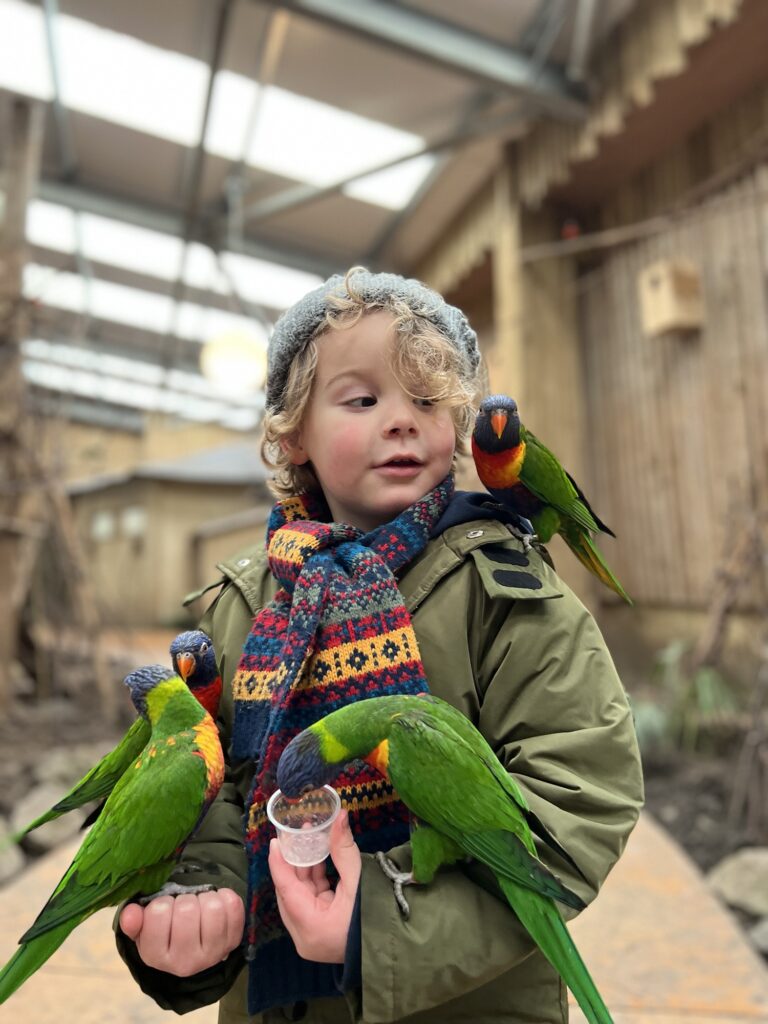
Later on, when he watches a documentary or learns something new, he connects it back. He’s very happy with factual books over story books. He can flick to any page and read in short bursts and then come back to it. Sometimes he will want to look up a statistic or detail for himself to see if the zookeeper was telling the truth at the animal talk, and he especially loves it when he can tell a zookeeper a fact that he knows he’s read before.
That’s how learning sticks.
It becomes something active, not something forced.
The Role of Conversation and Curiosity
One of the most important things you can do is talk.
Ask questions. Encourage curiosity. Be honest when you don’t know something and figure it out together.
Children need to learn that it’s okay not to know, and that asking questions is part of learning.
Over time, this builds confidence, understanding and the ability to think independently.
So What Actually Helps?
It’s not about sitting children down and making learning feel like school at home. In fact, that often has the opposite effect.
The most effective learning happens through everyday experiences, conversations, exploring new places, asking questions and following interests.
This is what builds understanding, not just knowledge.
If there’s one thing to take away, it’s this:
Children don’t just need more information. They need more context.
Reading plays a role, but without real-life experience, it can only go so far.
The more children see, do and explore, the easier it becomes for them to understand the world around them and succeed in school.
Focus on real-life experiences, conversations and practical activities rather than relying only on reading or worksheets.
Reading is important, but children also need real-life experiences to understand and apply what they read.
It’s the knowledge and experiences children gain from the world around them, which helps them understand what they learn in school.
Yes. When children can link learning to real experiences, it becomes easier to understand and remember.
Last Updated on Tuesday, April 14, 2026 by Lavania Oluban