
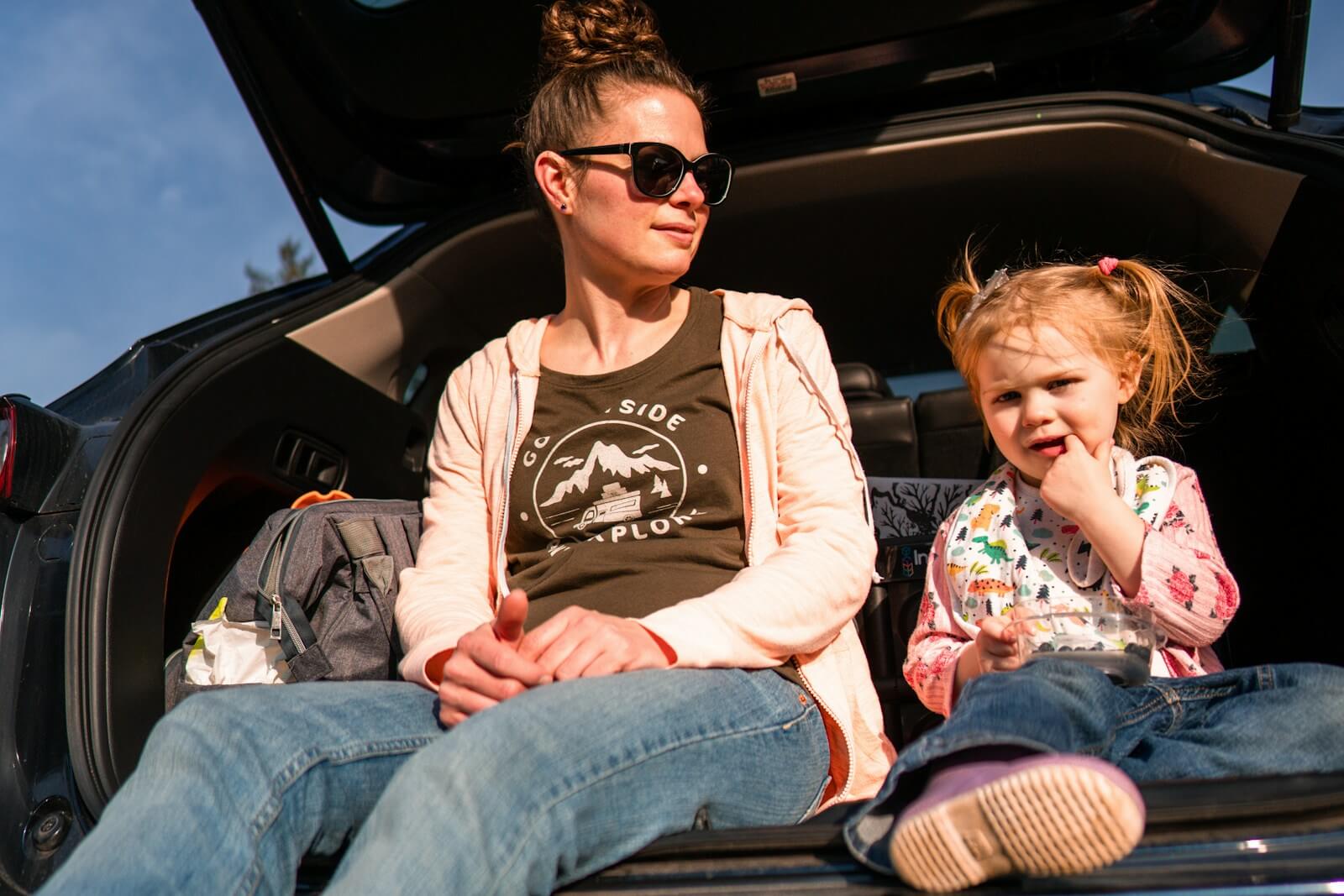
The compact SUV you already own made perfect sense when your family was smaller. But now there's another car seat, the kids are bigger, there's more gear to carry, and you've run out of room inside.
That's why the best used SUV for a growing family usually isn't the one with the longest list of features. It's the one with enough room for the way you live, without buying more size than you want to drive, park and fuel every day.
Once you know you need more room, the next question is how much. How many people ride with you regularly? How much gear do they bring? And will the SUV you buy today still work for you a few years from now?
Compact vs. Midsize SUV: Start with What Has to Fit
A compact SUV may still be enough for a family with one or two young children. Vehicles like the Honda CR-V, Toyota RAV4 and Subaru Forester give you two rows of seating and enough room behind the seats for strollers, groceries, luggage and the rest of the stuff that seems to multiply once kids are involved.
They’re also easier to maneuver than larger SUVs, which matters in school drop-off zones, grocery store parking lots and garages designed before every family vehicle got bigger.
Move up to a midsize SUV and you gain passenger room and, depending on the model, a third row. But the jump from compact vs midsize SUV doesn’t always buy as much usable space as you’d expect.
A 2022 Honda CR-V has up to 39.2 cubic feet of cargo room behind its rear seat. A 2022 Toyota Highlander has 48.4 cubic feet behind the second row, but only 16 cubic feet when the third row is raised.
So the question isn’t how big the SUV is overall. It’s how much room is left with the seats positioned where you’ll actually use them.
A Third Row Helps, Until You Need the Space Behind It
If you routinely carry five or six people, grandparents visit often, or your kids bring friends along, a third row starts making a lot of sense. It can avoid you having to take two cars, and on longer trips it gives everyone inside a little more breathing room.
However, there’s a catch: those extra seats take up the same space you want for cargo.
|
Used SUV example |
Seats |
Cargo behind third row |
Cargo with third row folded |
|---|---|---|---|
|
2022 Toyota Highlander |
Up to 8 |
16.0 cu. ft. |
48.4 cu. ft. |
|
2022 Kia Telluride |
Up to 8 |
21.0 cu. ft. |
46.0 cu. ft. |
The Telluride leaves more room behind an occupied third row. Fold that row down, and the Highlander is slightly roomier. Five cubic feet may not sound like much until you’re trying to fit a stroller behind seven passengers.
If the third row only gets used when grandparents visit, a smaller one may be fine. If all three rows are occupied most of the time, climb into the back yourself and then look at what’s left behind you.
The numbers only tell part of the story. Forty cubic feet sounds like a lot, but cubic feet are hard to visualize. A folded full-size stroller can take up roughly eight cubic feet on its own. A large checked suitcase is around four cubic feet, and a golf bag with clubs takes another three feet or so, and that's before you account for any awkward cargo area shapes.
Don’t Shop by the Biggest Cargo Number
Maximum cargo volume usually assumes the rear seats are folded down. That may be useful if you’re hauling furniture, but it doesn’t tell you much about a normal Tuesday with the kids.
What matters more is the cargo space behind the seats you actually have raised. An SUV advertised with 80 or 90 cubic feet of maximum cargo space may have surprisingly little room left when the third row is up. A smaller two-row SUV may be more useful if it can fit the stroller, diaper bag and groceries without making you unload everything in a parking lot to rearrange things.
Shape matters too. A tall, square cargo area can be easier to use than a longer one under a sloping roof. A high load height gets old when you’re lifting a stroller in and out several times a day.
If finding the SUV with most cargo space matters to you, don’t just test-drive it; test-fit it. Bring the stroller, hockey bag, folding wagon or whatever keeps filling up the back of the SUV you already own. Actually putting it in the cargo area will tell you more than a tape measure ever will.
Make Sure the Car Seats Actually Fit
Passenger capacity gets a little theoretical once child seats enter the picture.
A second row may be rated for three passengers, but two bulky car seats can make the middle position nearly useless. Captain's chairs solve one problem by making the third row easier to reach, but now you’ve given up a seat.
Bring the child seats you already use when you test-fit the SUV. Install them and see what happens to the front-seat legroom. Then try getting someone into the third row with those car seats in place.
The Insurance Institute for Highway Safety also evaluates how easy the LATCH child-seat anchors are to use in individual vehicles. Its vehicle ratings let you check specific model years rather than assuming a newer or larger SUV will automatically work better with child restraints.
Bigger Isn’t Automatically Better
It’s easy to buy for the biggest version of your future family life. Maybe there’ll be another child. Maybe the kids will play travel sports. Maybe their friends will be in the car every weekend.
Pretty soon you’re looking at a large three-row SUV because there’s some Saturday when every seat and every inch of cargo space might be useful. That Saturday matters. But so do all the ordinary days in between.
If four people are in the SUV almost all the time, a roomy compact or two-row midsize model may be easier to live with than something built for eight. Less vehicle to park, less vehicle in the garage, and no empty third row following you around every day.
Then again, if you’re already folding seats, stacking bags and putting things at passengers’ feet, you probably know the current SUV is too small.
The best family SUV gives you enough extra room to grow without making every occasional need permanent.
Used Can Buy You More SUV
Going used may put a larger SUV within reach without pushing you into a new-vehicle price. A certified pre-owned SUV can cost more than a regular used one, but it typically comes with lower mileage, a comprehensive mechanical and cosmetic inspection, manufacturer-backed warranty coverage and other benefits that make the purchase feel less like a gamble.
Going used may also get you features that were out of budget when the vehicle was new. Heated seats, a power liftgate, rear climate controls or memory seats may not sound essential while you’re shopping, but you’ll definitely come to appreciate those conveniences after a few months of school runs and family trips.
Pay attention to model year as much as trim. Safety systems, infotainment, powertrains and interior packaging can change from year to year, because two SUVs with the same badge may be more different than they look.
Once you know which SUV fits your family, the best places to find used cars online can open up more choices than whatever happens to be on nearby dealer lots. That matters if you’re trying to find a particular seating layout, drivetrain or trim rather than just “a midsize SUV.”
Sometimes the best reason to widen the search is simply so you don’t talk yourself into the almost-right one and regret it six months later.
Check the SUV in Front of You
A good model reputation only gets you so far with a used vehicle. Two SUVs that look nearly identical can have very different histories.
The Federal Trade Commission recommends getting a vehicle history report and having the SUV inspected by an independent mechanic before you buy it. A history report can uncover accidents, title issues or previous ownership information, but it can’t replace someone actually looking at the vehicle. The FTC used-car guide recommends an independent inspection even when the vehicle is certified or comes with a warranty.
Family SUVs also tend to wear in predictable places. Try the rear doors, seat-folding mechanisms, power liftgate, climate controls and USB ports. Look at the second- and third-row upholstery. These aren’t exciting things to inspect, but they’re the things you’ll notice every week if they don’t work.
Before you make your decision, run the VIN through the National Highway Traffic Safety Administration recall lookup to check for unrepaired safety recalls tied to that particular vehicle.
Buy for the Family You Actually Have
There isn’t one best used midsize SUV for every family. There also isn’t one best used 3 row SUV that works for the number of people, gear, and pets you have.
One toddler and a stroller may fit beautifully in a compact SUV with a big cargo area. Three children may make second-row width more important than total cargo volume. Add grandparents or friends to the regular passenger list, and suddenly the third row matters a lot more.
Test-fit all the SUVs you’re considering for how your family would actually use them. Sit in every row, put the car seats in and bring along the stroller, sports gear or other bulky items you carry most often. Then open the liftgate and see how much room is left with the seats where you’ll normally keep them. You’ll have a better idea of practical space and what type of car shipping to send that SUV back to your driveway.
Think about the grocery run, the weekend trip and the Saturday when everyone seems to bring something along with them.
The right SUV usually gets easier to spot once you stop asking which one is biggest and start asking whether your family fits.
Last Updated on Tuesday, November 10, 2026 by Lavania Oluban